Few paths in the world reward effort with a fragrance that precedes every other sensation. The Lemon Path, connecting Maiori to Minori in just over two kilometres, is one of them. Ancient stone steps shaded by Sfusato Amalfitano IGP lemon pergolas, sudden views over the sea and the upper hamlets of the Coast, and stops at family-run farms.
It is an easy trek, accessible even for children, but with a density of landscape, history, and nature that surpasses many high-mountain walks. This is the complete guide: route, map, best period, what to see along the way.
The Route: Maiori, Minori and Ravello
The Lemon Path has two main variants. The best-known connects Maiori to Minori through the upper hamlets (about 2 km, 45-60 minutes). The longer one continues from Minori toward Ravello via a historic staircase (total 4-5 km, 2-3 hours).
Classic version
Maiori → Minori (45-60 min)
About 2 km, mostly uphill at the start from Maiori, then flat through the lemon groves, then downhill to Minori. Easiest and most iconic section. Suitable for everyone, including children.
Extension
Minori → Ravello (+1-1.5 h)
Continue from upper Minori for about 1,500 steps of a historic medieval staircase. Demanding climb compensated by arrival at Ravello's main square with its gardens.
Reverse direction
Minori → Maiori (more comfortable)
Same route reversed: from the Minori staircase a brief climb to the path, then mostly downhill to Maiori. Easier on average and less tiring. The views are the same in reverse order.
Combined
From Ravello to the Sea (downhill)
Start by SITA bus to Ravello, visit the gardens of Villa Rufolo and Villa Cimbrone, then walk down through the lemon groves to Minori. Total about 3 hours, one of the most spectacular on the Coast.
Sfusato Amalfitano: The King of Lemons
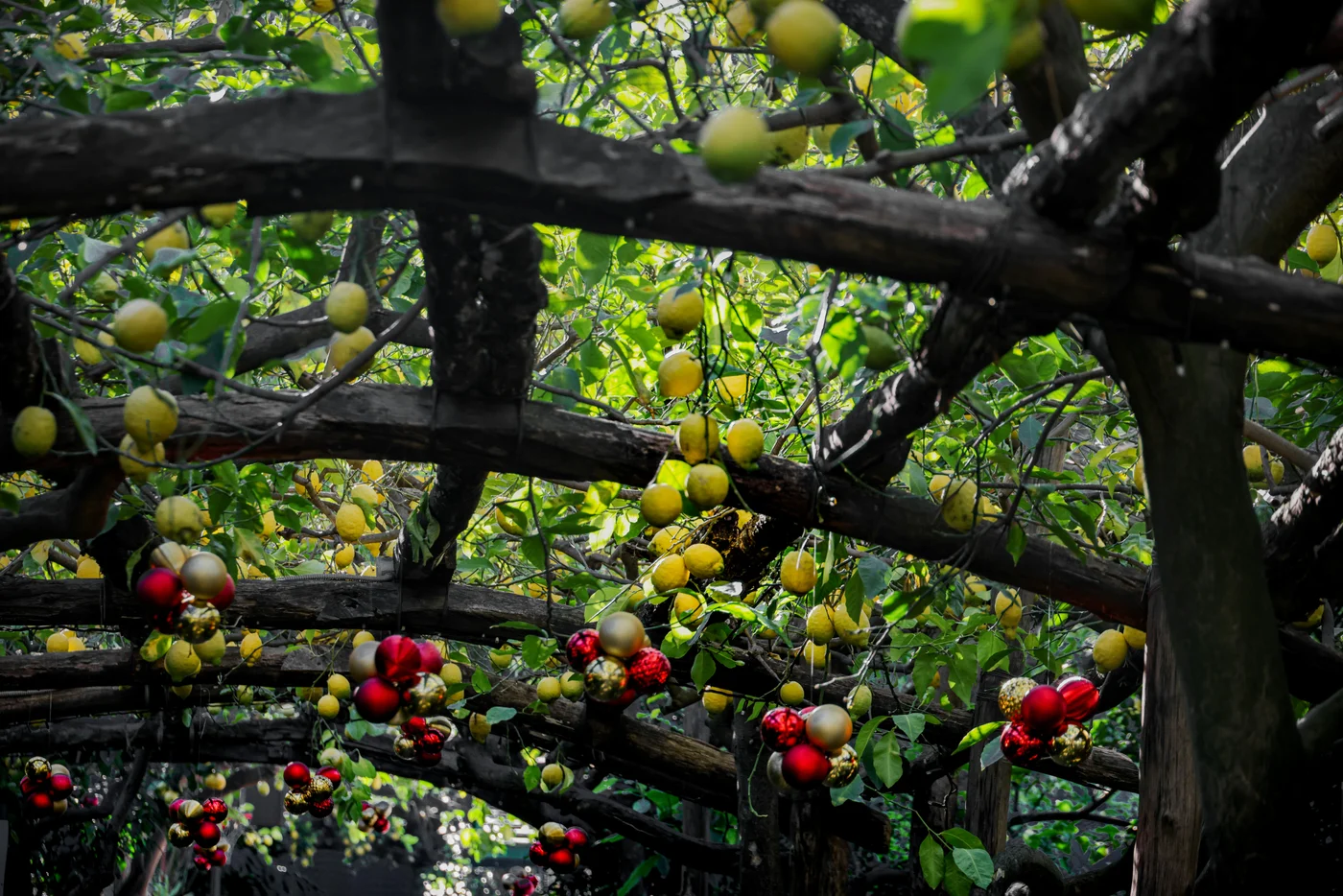
The Sfusato Amalfitano IGP lemon is the variety that made the Amalfi Coast famous worldwide. Cultivated since the Middle Ages on steep terraces between Vietri sul Mare and Positano, it has unique characteristics.
Unique Characteristics
Elongated "spindle" shape (hence the name "Sfusato"), thick rough skin, pale yellow flesh with few seeds, sweet juice with low acidity. The skin's fragrance is ten times more intense than industrial lemons. They keep for weeks without losing properties.
IGP recognition obtained in 2001, now protecting the variety from imitations. On the Lemon Path pergolas, fruits often weigh over 250 grams and reach 15 centimetres in length.
Along the path you pass dozens of family farms, many of which sell directly to the public: fresh lemons, lemon marmalade, artisanal limoncello, delizia al limone. Buying here means supporting the farmer terraces that have defined the Coast's landscape for a thousand years.
What to See Along the Path
The Lemon Path is not only nature. Along the route you find ancient churches, panoramic viewpoints, and corners of rural archaeology.
Church of San Pietro Apostolo (Torre)
Small church in the upper hamlet of Maiori, dated 13th century. Panoramic view over the Gulf of Salerno and cultivated terraces. Open only during Sunday services.
Twin-Village Belvedere
About halfway, an opening in the pergolas offers one of the most photographed views on the Coast: Maiori on the right with its one-kilometre beach, Minori on the left with its small bay, the blue sea at the centre.
Family-run farms
Three or four farms along the route open their stalls to walkers. You can often taste limoncello and marmalade before buying. Prices typically half those of the tourist centre.
Basilica of Santa Trofimena (Minori)
At arrival in Minori, the 12th-century Basilica preserves the relics of the town's patron. Worth a 15-minute visit to see the crypt and majolica floors.
5 Tips for the Lemon Path
1. Go early morning in spring
From April to June lemons are in bloom and the air smells of zagara. Early morning (by 9 am) the pergolas are cool and almost empty. Recommended breakfast in Maiori before starting.
2. Buy directly from farmers
Small farmer stalls along the path offer limoncello, marmalade, and lemons at half the price of tourist shops. It also means supporting the farmer terraces.
3. Combine with Minori beach
After the path, Minori beach is 5 minutes on foot from the Basilica. Swim and lunch of lemon pasta in one of the restaurants on the seafront.
4. SITA bus to return
From Minori, SITA buses return to Maiori in 5 minutes. Frequency every 15-30 minutes. Avoid walking the reverse climb.
5. Extension to Ravello
If you are fit, from Minori climb to Ravello via the historic medieval staircase. Three hours total, but reaching Villa Rufolo after walking through lemon groves is an experience that justifies the entire Coast trip.
Frequently Asked Questions
How long is the Lemon Path?
Where does the Lemon Path start?
Is it suitable for children?
What are Sfusato Amalfitano lemons?
When is the best time to walk the Lemon Path?
Can you pick lemons from the path?
Written by
Amalfi Coast Travel
Hiking & Heritage Editor · Amalfi Coast