
Amalfi Coast
Positano
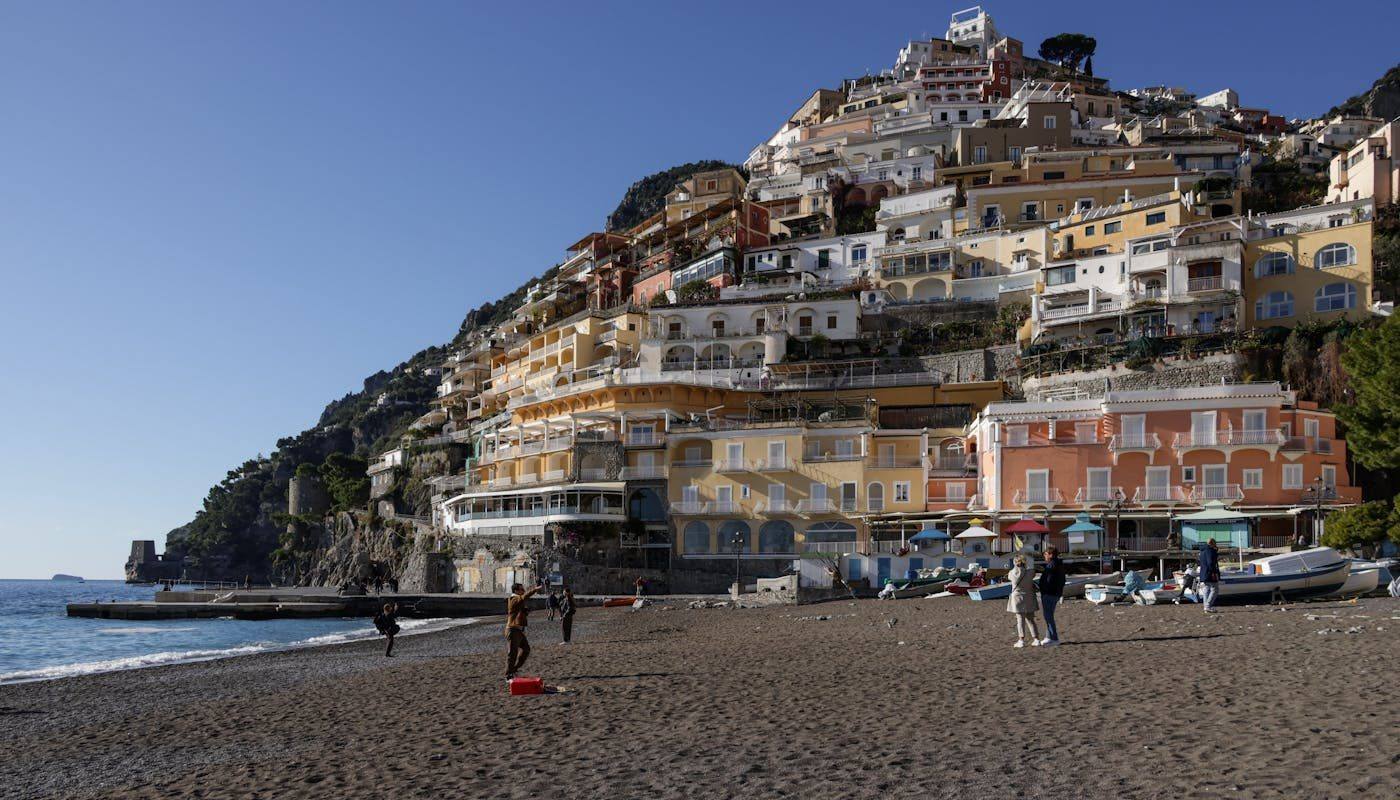
Pastel houses cascading to the sea, iconic Amalfi Coast beach. The village that inspired Steinbeck and Picasso.
Positano is the symbol of the Amalfi Coast: an amphitheatre of coloured houses - white, ochre, pink - cascading steeply toward the sea. With fewer than 4,000 inhabitants, the village concentrates a density of beauty that few places on earth can match.
Writer John Steinbeck described it in 1953 as "a place difficult to reach and impossible to forget." Seventy years later, that description remains perfect. Positano is not a tourist destination - it is a sensory experience, where every turn reveals a new view and every trattoria a genuine flavour.
Did You Know?
1,000+
steps of staircases in the historic centre
14°C
average temperature in January
4 m
estimated visitors every year
The name "Positano" most likely derives from the Latin Positanum, from a Roman family called Posidio who owned a villa here in the 1st century AD.
What to See in Positano
Church of Santa Maria Assunta
The green and yellow majolica dome is the symbol of the village. Inside it houses the Black Madonna of Positano, a 12th-century Byzantine icon. Free entry, open every day.
Spiaggia Grande
The main beach - an arc of dark pebbles with a view of colourful boats. The free section costs nothing; beach clubs offer sun loungers and umbrellas. In summer it fills up early: arrive before 9:00 am.
Fornillo Beach
Reachable on foot from Spiaggia Grande via a scenic 10-minute path. Less crowded, with two spectacular sea stacks (I Galli islands) on the horizon.
Via dei Mulini and the Centre
The main street of the village, lined with fashion boutiques (Positano is Italy's beach fashion capital), ceramics shops and restaurants. Best explored in the evening to avoid the crowds.
Path of the Gods
The coast's most spectacular hike starts from Nocelle, above Positano, and ends at Agerola. About 7.5 km with breathtaking views over the Gulf of Salerno. Difficulty: moderate.
How to Get to Positano
There is no railway station in Positano. The main options are the ferry (seasonal) and the bus. In summer, avoiding a car is strongly recommended.
By Sea
April to October: from Salerno, Amalfi, Sorrento and Naples. Arriving by sea offers the most iconic view of the village.
SITA Bus
Connects Positano with Sorrento and Amalfi along the SS163. Affordable (~€2.50), available year-round.
Ferry Schedules - Summer 2026
Services run approximately April to October. Always verify current schedules on the official company websites.
| Departs Salerno | Arrives Positano | Notes |
|---|---|---|
| 07:15 | 08:55 | Via Cetara, Maiori, Amalfi |
| 09:00 | 10:40 | - |
| 11:00 | 12:40 | - |
| 14:15 | 15:55 | - |
| 16:30 | 18:10 | - |
| Departs Naples | Arrives Positano | Duration |
|---|---|---|
| 09:00 | 10:30 | ~90 min |
| 11:00 | 12:30 | ~90 min |
| 14:00 | 15:30 | ~90 min |
* Schedules are indicative for the 2026 season. Check travelmar.it and alilauro.it to confirm.
SITA Bus - Sorrento ↔ Positano (SS163)
The SITA bus is the most affordable option (~€2.50). Departs from Sorrento Piazza Tasso. Frequent services year-round.
| Departs Sorrento | Arrives Positano | Frequency |
|---|---|---|
| 06:30 | 07:20 | Weekdays only |
| 08:00 | 08:50 | Daily |
| 09:30 | 10:20 | Daily |
| 11:00 | 11:50 | Daily |
| 13:00 | 13:50 | Daily |
| 15:30 | 16:20 | Daily |
| 17:30 | 18:20 | Daily |
* Indicative schedules. Extra services added in summer. Check sitasudtrasporti.it for updated timetables.
Hidden Gems of Positano
Beyond the postcards: four corners that passing tourists never find.
Arienzo Beach
A beach reachable only by sea or down 300 steps. In high season it is far less crowded than Spiaggia Grande. Boat hire available from the harbour.
Nocelle and the Path of the Gods
The hamlet of Nocelle (418 m asl) above Positano is reachable by shuttle bus. Panoramic views over the village and the sea with no crowds.
Torre Trasita
One of the medieval Saracen towers of the village, today rented as a private holiday home. Visible and photographable from outside along the main street.
Authentic Breakfast (Local Style)
Skip the seafront bars (tourist prices) and look for bars frequented by locals in the upper streets of the village for an authentic breakfast at normal prices.
Local Tip
Authentic breakfast in Positano
Skip the seafront bars (tourist prices). Head up into the upper streets and find the bars the locals use. Try a lemon cream cornetto with a shaken espresso watching the village wake up - the same experience at half the price.