
Ischia · Gulf Islands
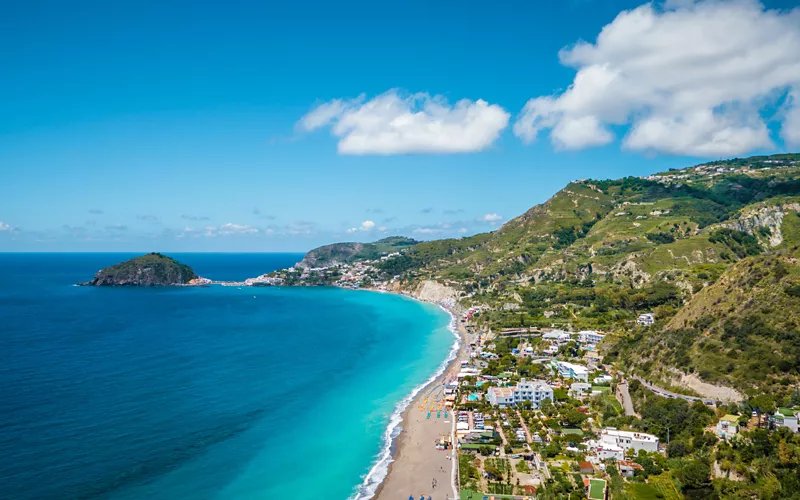
Spiaggia dei Maronti
Three kilometres of warm sand heated from below by the volcano.
Natural Thermal Wellness
Maronti offers a one-of-a-kind experience in Italy. The beach is vast - three kilometres of dark volcanic sand - and the sand itself is warmed by volcanic heat from below via fumaroles: jets of hot steam that emerge from the sand, reaching temperatures above 60 °C in some spots.
Perfect for walkers wanting to escape the bustle of the ports of Procida and Capri. The sheer length means even in August you can always find a quiet corner. The water is calm and ideal for families with young children.
The Fumaroles
The fumaroles are located in the central section of the beach (Fumarole Beach area). You can bury your feet in the warm sand for a free natural thermal effect. Do not get too close to the steam vents: temperatures can be very high. Children must be supervised in this area.
Born of Fire: The Volcanic Origin
Maronti beach owes its existence to Monte Epomeo (788 m), the dormant volcano that dominates Ischia. Prehistoric eruptions deposited layers of mineral-rich volcanic tuff which millennia of marine erosion have transformed into the dark, heavy sand underfoot today. Ischia is the most volcanically active island in the Mediterranean: the heat of the underlying magma still warms the ground and the water, creating the thermal springs that have made the island famous since antiquity.
The 1883 earthquake (magnitude 5.8), which devastated the town of Casamicciola above the beach, also caused a small tsunami that reached Maronti. That catastrophe prompted Italy to adopt its first seismic building codes in history. The zone remains seismically active today, but is perfectly safe for visitors.
The Cavascura Canyon
Hidden behind the beach, accessible from its eastern end along a short path, lies the Cavascura canyon: a narrow rocky gorge with natural thermal springs and a rustic spa carved from the living rock. The ancient Romans already used these healing waters. Today you can bathe in warm thermal water under a natural waterfall, surrounded by tall rocks and Mediterranean vegetation. A completely different experience from the beach, just minutes away.
The seasonal stream that reaches the beach at its centre was once famous for rare plants and natural thermal mini-pools. A landslide in 2017 partially altered the landscape, but environmental recovery is under way.
The Greeks of Pithecusae
Ischia was called Pithecusae by the ancient Greeks, who in the 8th century BC founded the first Greek colony in the western Mediterranean here. Some theories suggest that the Euboean colonists landed near the Maronti bay, attracted by its sheltered position. Ceramic finds from the hinterland date to that era. Ischia preceded the founding of Cumae on the mainland by decades, becoming the gateway of Greek civilisation into Italy.
3
km of beach
60°C
max fumarole temp
788
m Monte Epomeo
8th BC
first Greek colony
Local Tips
- Take the taxi boat from Sant'Angelo: 5 minutes of scenic crossing instead of 40 minutes by bus. Worth every cent.
- Arrive before 9:00 or after 17:00 to find the beach almost deserted even in August.
- For the Cavascura thermal baths, bring flip-flops: the path is uncomfortable to walk barefoot.
- In the fumarole zone, test the temperature first with your hand: the heated sand can vary a great deal from spot to spot.
- The restaurants on the beach serve excellent local fish. Lunch in September, with fewer tourists and lower prices, is the best experience.
How to Get There
Bus Line 5
From Ischia Porto
Alight at Barano. Then downhill path to the beach (15 min).
Scooter / Car
From Barano d'Ischia
Paid parking near the beach. Convenient for those staying inland.
On foot
From Sant'Angelo
30 minutes along the coastal path. Scenic but demanding on the return climb.