Key Takeaways
- Authentic limoncello is made exclusively with IGP lemons from the Amalfi Coast: the Sfusato Amalfitano or the Femminiello Sorrentino — always untreated, never waxed.
- Only the yellow outer zest (flavedo) goes into the alcohol: the white pith (albedo) will make your limoncello bitter.
- Classic ratios for 1 liter of 96% alcohol: zest of 15–18 lemons, 1.2 liters of water, 800 g of sugar.
- Minimum infusion time is 7 days in a dark place, but the grandmother's recipe calls for at least 15 days for a richer fragrance.
- Always serve directly from the freezer in chilled shot glasses — never at room temperature.
Limoncello is the most iconic liqueur of the Amalfi Coast and the Sorrentine Peninsula: a bottle that captures sunshine, fragrance, and generations of tradition. This is the original Amalfi limoncello recipe — the one that coastal families have passed down for generations — with precise ratios and the secrets to making it perfectly at home. If you've been wondering how to make limoncello the way your grandmother would, you're in the right place.
The Origins of Limoncello: Amalfi or Sorrento?
The origins of limoncello are contested among at least three claimants: Amalfi limoncello, the Sorrento version, and Capri. One thing is certain: this liqueur was born where the Mediterranean's finest lemons grow. The Sfusato Amalfitano IGP and the Femminiello Sorrentino are the two prestige varieties, grown on terraced hillsides plunging to the sea, always untreated with wax or pesticides.
The original limoncello recipe was born in the kitchens of Campanian grandmothers, who used pure grain alcohol to extract the essential oils from the intensely fragrant peels of freshly picked lemons. Every family had — and many still have — their own version, with small variations in ratios and infusion times.
The Neapolitan and Amalfitan traditions differ in the details: the Neapolitan limoncello recipe tends to use more sugar and a shorter infusion, while Sorrento limoncello focuses on the intense fragrance of the Sfusato through longer steeping. In this guide we walk you through making limoncello following the original Amalfi Coast recipe.
Limoncello Ingredients: The Perfect Ratios
Here are the limoncello ingredients and ratios for the classic version using 500 ml of 96% grain alcohol. To make the 1-liter alcohol version, simply double everything.
Ingredients (yields ~1 liter of limoncello)
8–10 untreated lemons (Sfusato Amalfitano IGP preferred)
500 ml pure grain alcohol at 96% (food-grade)
700 ml still mineral water
500 g granulated sugar
How to Make Limoncello: Step by Step
The Original Recipe
Wash the lemons under cold water and dry them thoroughly. No soap needed — IGP lemons have no wax coating.
Zest only the yellow layer (flavedo) using a sharp peeler. Never go into the white pith (albedo): it will make your limoncello bitter.
Place the zest in the alcohol in an airtight glass jar. Seal tightly and store in a dark place at room temperature.
Infuse for at least 7 days, ideally 15. The grandmother's rule: "When the alcohol turns golden yellow and the peels have gone pale, it's ready."
Make the syrup: warm the water (do not boil) and dissolve the sugar, stirring until clear. Let it cool completely.
Strain the alcohol and combine with the cold syrup. Stir gently and bottle. Rest in the freezer for at least 24 hours before serving.
"A good limoncello announces itself through smell: close your eyes and if you can picture a lemon grove, you've done it right."
Limoncello Recipe: 1 Liter of 96% Alcohol
For a larger batch, here are the ratios for 1 liter of 96% alcohol. These are also the original artisan ratios used by Amalfi Coast producers:
| Ingredient | Quantity |
|---|---|
| Untreated lemons | 15–18 (Sfusato Amalfitano) |
| Pure grain alcohol 96% | 1 liter |
| Mineral water | 1.2 liters |
| Granulated sugar | 800 g |
Final yield: approximately 2 liters at ~30–32% ABV. For a less sweet limoncello, reduce sugar to 600 g.
Limoncello with Grappa: The Softer Variation
Grappa limoncello (or vodka limoncello) is a widely popular variation across northern and central Italy. The method is identical, but instead of pure grain alcohol you use a neutral unaged grappa. The result is a limoncello liqueur that is smoother and lower in proof, around 25–28% ABV. Some people also make a lighter version with grain alcohol by simply halving the quantities.
With grappa
Use a neutral unaged grappa (not barrel-aged). The syrup should be lighter: 400 g sugar dissolved in 500 ml water per 1 liter of grappa.
With vodka
Vodka (40% ABV) produces a lighter, easy-drinking limoncello. Reduce the syrup to 300 g sugar in 400 ml water per 1 liter of vodka.
Crema di Limoncello: The Original Amalfi Creamy Version
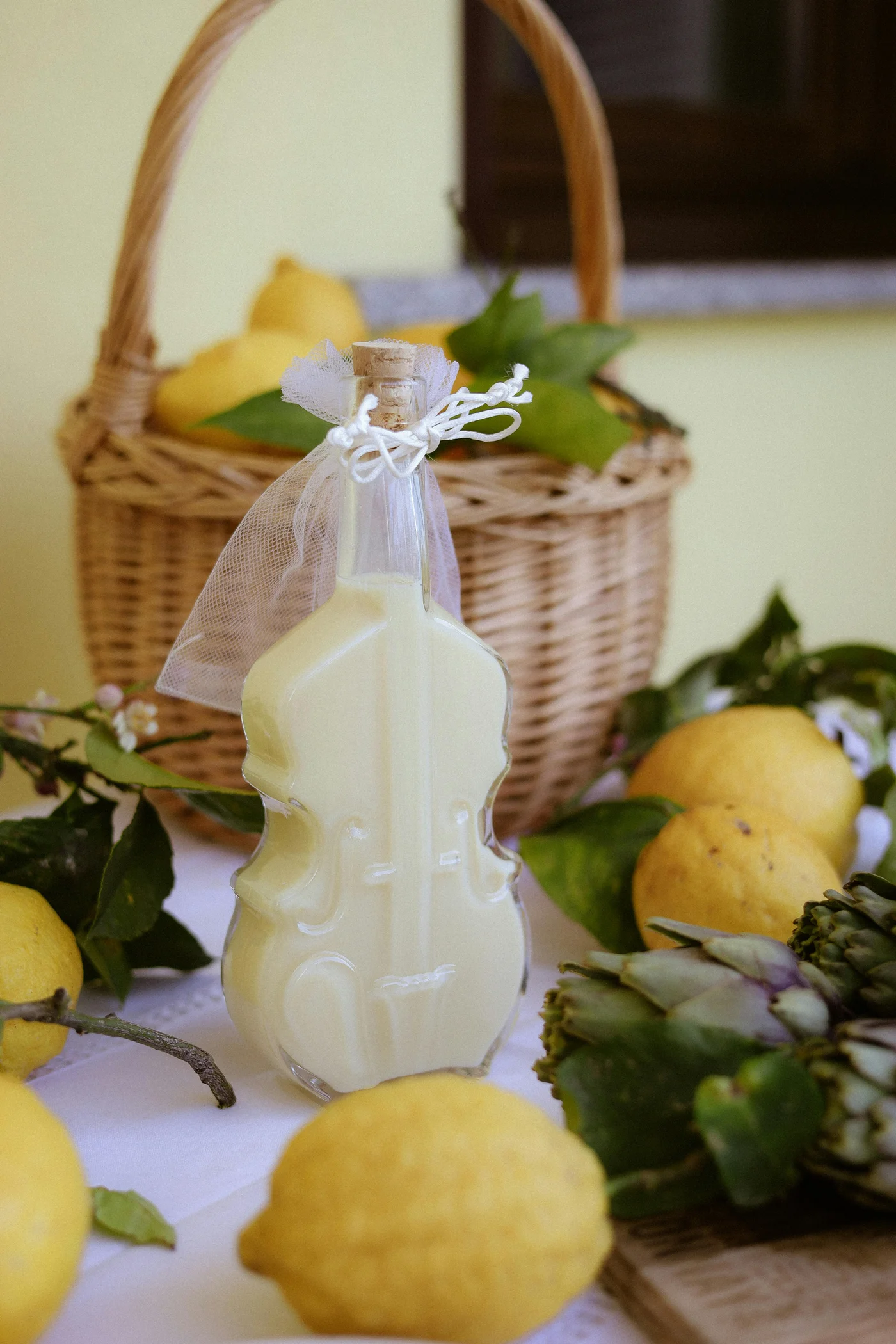
Crema di limoncello is the velvety variation beloved on the Amalfi Coast. Instead of a simple sugar syrup, you substitute whole milk and cream: the result is a rich, silky liqueur that is perfect after dinner or paired with desserts.
The original Amalfi crema di limoncello recipe calls for 500 ml whole milk, 250 ml heavy cream, and 400 g sugar per 500 ml of infused alcohol. Store in the refrigerator (not the freezer) and consume within 2–3 weeks. The Sorrento version is very similar — the only real difference is which lemon variety you use.
Where to Taste Artisan Limoncello on the Amalfi Coast
| Town | Experience |
|---|---|
| Amalfi | Artisan shops along Via Lorenzo d'Amalfi offer free tastings and tours of working lemon groves. |
| Ravello | Artisan producers with panoramic terraces where you can sip limoncello while gazing out over the coast. |
| Minori | Sal De Riso pairs his limoncello with traditional pastries (Delizia al Limone, Baci di Limone) for the full lemon experience. |
| Sorrento | Limoncello tours through the citrus groves of the Sorrentine Peninsula, including lemon picking and a guided making session. |
Expert Tips
Yellow only
The most common mistake is peeling too deep. Use a sharp vegetable peeler and take thin strips: only the yellow flavedo contains the essential oils that give limoncello its fragrance.
Untreated lemons are non-negotiable
Supermarket lemons are often waxed. If you can't find IGP lemons, look for certified organic unwaxed lemons. The difference in final fragrance is enormous.
Be patient with the infusion
Don't rush: the longer the infusion, the more fragrant the result. The grandmother's recipe says at least 15 days, but many Amalfi Coast artisans go 30–40 days for an extraordinary outcome.
Frequently Asked Questions
How many lemons do I need for one liter of limoncello?
What are the ratios for limoncello made with 1 liter of 96% alcohol?
How long should limoncello infuse?
Can I make limoncello with grappa?
What is the difference between limoncello and limoncino?
How do I store homemade limoncello?
Why does my limoncello taste bitter?
Written by
Amalfi Coast Travel
Food & Travel Specialist · Amalfi Coast