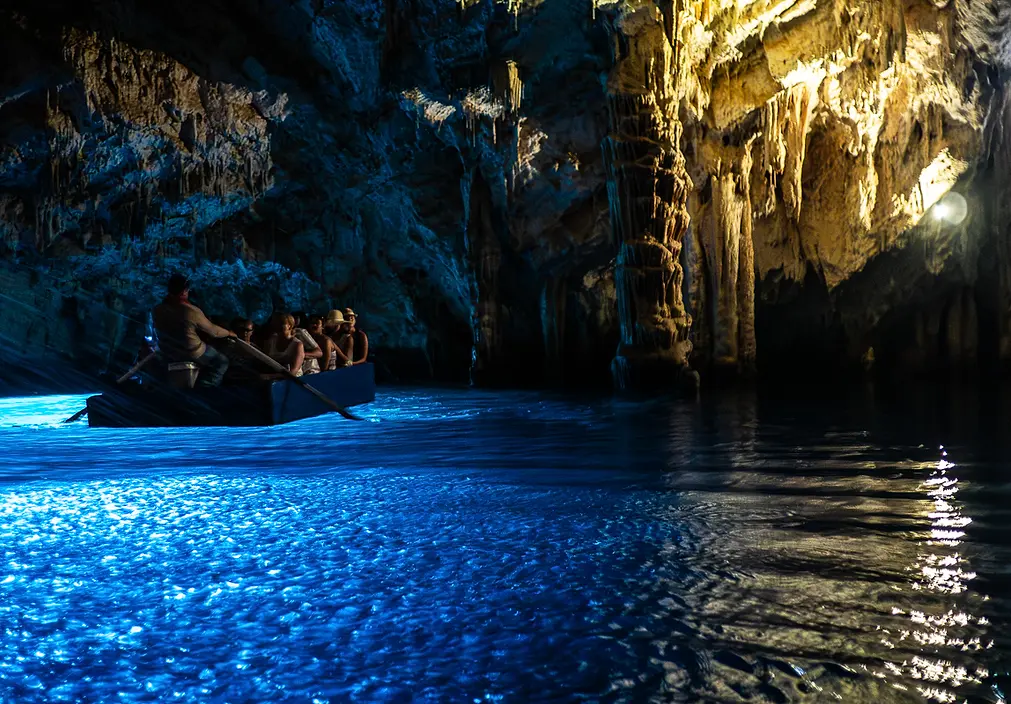
There is a precise moment when the boat slips into the darkness of the cavern and then, suddenly, everything transforms. The water is no longer blue: it turns green. An intense, surreal green, as if someone had dissolved an enormous emerald into the Tyrrhenian Sea. Welcome to the Emerald Grotto, one of the most extraordinary natural phenomena of the Amalfi Coast.
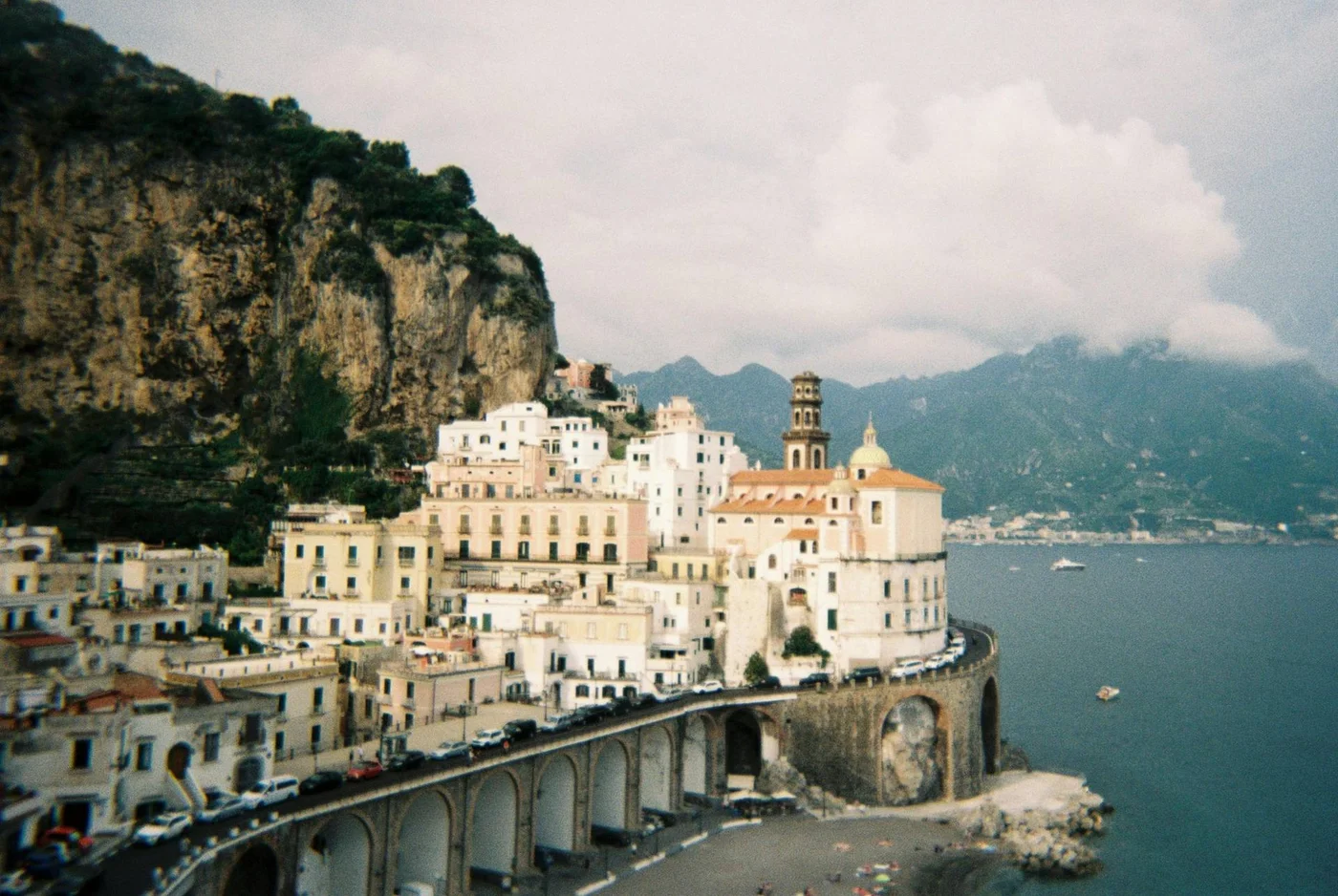
Located in Conca dei Marini, a small municipality of fewer than 800 inhabitants nestled between Positano and Amalfi, the grotto is reachable both by sea and by land. It is one of the most fascinating - and least frantic - destinations on the entire Coast.
The Discovery and Geological History
It was 1932 when local fisherman Luigi Buonocore, navigating with his boat in search of sheltered anchorages along the coast, stumbled upon a small opening in the limestone rock. Curiously squeezing inside, he found himself before a spectacle he had never seen: a gigantic cavern illuminated by a supernatural green light. This is how the Emerald Grotto was officially discovered.
But the true geological history of the grotto is far older. It is a karst cave formed millions of years ago within the Mesozoic limestones that make up the backbone of the Lattari Mountains. Originally it was a terrestrial cave, with the classic stalactite and stalagmite formations typical of limestone caverns.
Bradyseism: When the Earth Subsides
The phenomenon that transformed this terrestrial cave into a marine cavern is called bradyseism: a slow but inexorable subsidence of the ground caused by underlying volcanic activity. Over the centuries, this entire section of coast "sank" by several meters, bringing the cave floor below sea level.
The result is a cavern that is half terrestrial (with stalactites hanging from the ceiling) and half marine, with Tyrrhenian water occupying the lower part. The original stalagmites are now submerged at about 4 meters depth, visible from above through the crystalline waters.
The Emerald Grotto's Secret: Why the Water Glows Green
The phenomenon that makes this grotto unique in the world is purely optical-physical, but no less wonderful for that. At the bottom of the grotto, at about 8 meters depth, a large gap in the limestone opens directly onto the open sea.
Light enters from below
Sunlight penetrates from the outside through this underwater opening. Instead of illuminating the cavern from above as normal, it illuminates it from below upward.
Water filters out red wavelengths
Seawater absorbs the longer wavelengths of the spectrum (reds and oranges) while letting green and blue-green frequencies pass through. The result is light that reaches the cavern's surface already strongly shifted toward green.
Refraction amplifies the effect
When this green-filtered light emerges at the surface, it illuminates the cavern from below creating a glow that reflects off the limestone walls and ceiling. The result is that magical, almost underwater atmosphere that envelops you the moment you enter.
The Underwater Nativity Scene: A Tradition Since 1956
At about 4 meters depth, on the grotto floor, lie the figures of a glazed ceramic nativity scene. This is the Underwater Nativity Scene, one of the most evocative traditions of the entire Amalfi Coast.
The story begins in 1956, when pier owner Donato Carotenuto decided to place some ceramic figures on the grotto floor. The work was created by Sorrentine artist Attilio Pentone, specialized in traditional Campanian ceramics. The figures represent the classic Nativity: the Holy Family, the Wise Men, shepherds and animals from the Neapolitan nativity tradition.
Every December 24th, a group of local divers descends to the bottom to add new figurines, keeping alive a tradition that today counts more than 30 statuettes, visible through clear waters bathed in emerald light.
How to Get There: All Options
The Emerald Grotto is located on the Amalfi Coast Road between Amalfi (5 km) and Positano (15 km). There are three ways to reach it.
| Transport | Departure | Duration | Notes |
|---|---|---|---|
| By sea (recommended) | Amalfi port | ~10 min | Taxi-boat with frequent departures (April–October). Price approx. €10-12 return. Board directly onto the boat that enters the grotto. |
| By land (lift) | SS163 – Conca dei Marini | 2 min by lift | Parking on the main road, then panoramic lift to the pier. Ideal if coming by car. Included in ticket. |
| SITA Bus | Amalfi / Positano | 15-25 min | Get off at the "Grotta dello Smeraldo" stop on the SS163. Then take the lift. Most economical option but depends on bus schedules. |
What to See Nearby: the Perfect Itinerary
The Emerald Grotto is just one of Conca dei Marini's attractions. Just 2 km along the SS163 you'll find Marina di Conca, the village's small turquoise bay — tucked between limestone cliffs and still frequented by local fishermen. It's the perfect base for a seafood lunch after visiting the grotto.
Recommended Half-Day Itinerary
- 9:00 - 9:30 AM · Arrive via SITA bus or car to the SS163, take the elevator down to the Emerald Grotto
- 10:00 - 10:30 AM · Boat visit of the grotto with emerald light at its peak
- 11:00 - 12:30 PM · Descend to Marina di Conca for a half-day at the beach or snorkeling
- 1:00 PM · Lunch at La Tonnarella, the historic beachfront restaurant
- 3:00 PM · SITA bus or car to Amalfi (5 km) or Praiano (3 km)
Alternatively, you can combine the grotto with a more complete boat tour that also includes the Fiordo di Furore and Marina di Praia — a 3-4 hour complete experience departing from Amalfi or Positano.
3 Local Tips
1. Go in the morning, between 10am and 12pm
This is when the sun illuminates the underwater opening at the best angle, maximizing the emerald effect. In the afternoon the light fades and the tones dim considerably.
2. Check sea conditions before leaving
With sea force 3 or above, sea access to the grotto is suspended. If there is southwest wind (Libeccio), check the taxi-boat availability directly at Amalfi port. Bad weather can close the grotto even in the height of summer.
3. Combine with a walk around Conca dei Marini
After the grotto, walk up to Conca dei Marini village center: it is one of the most intact and least touristy villages on the Coast. The small Conca dei Marini beach below the village is a hidden gem rarely visited by tourists. The original sfogliatella (the "sfogliatella di Conca") is only eaten here.
Frequently Asked Questions
How do you reach the Emerald Grotto?
What is the best time to visit?
How much does the entrance ticket cost?
What is the Underwater Nativity Scene?
Why is the water emerald colored?
How long does the visit take?
Written by
Amalfi Coast Travel
Local Guides · Amalfi Coast